

How to Manage a Mobile Workforce Using Technology
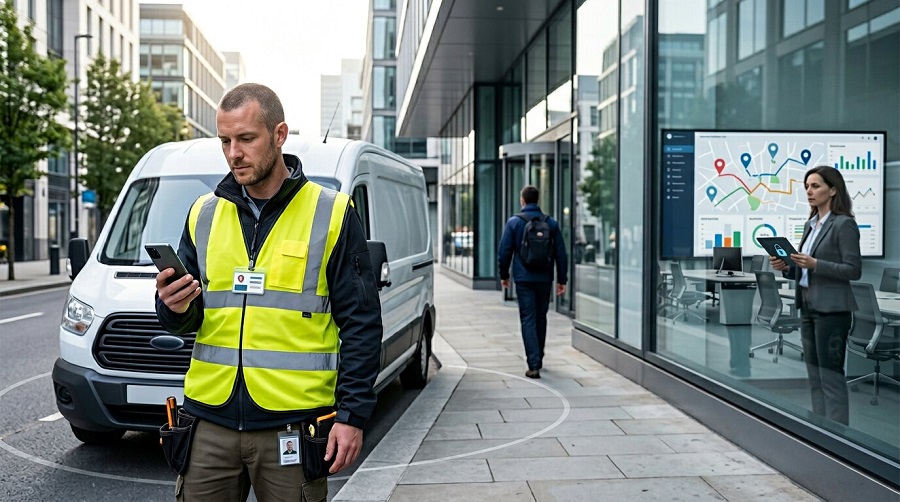
You’re under pressure to manage people who rarely set foot in a central office, yet you’re still accountable for productivity, compliance, and data security. The right technology can turn that chaos into a coordinated system, with centralized scheduling, GPS-backed time tracking, secure messaging, and real‑time dashboards. But if you pick tools without clear policies, roles, and safeguards, you’ll create more problems than you solve, which is why you need to first…
What a Mobile Workforce Is (And Isn’t)
If you want to find a quick way to understand how modern teams operate beyond the office, a mobile workforce is essentially made up of employees who work across different locations, whether they’re field technicians, sales professionals, or hybrid staff using mobile devices to stay connected, receive tasks, and update progress in real time.
It’s not just about working from home; it’s about constant movement, where productivity depends on how well teams can stay coordinated while on the go.
Managing this kind of workforce requires more than basic communication tools. Businesses need location-aware systems like geofencing, route tracking, and real-time updates to ensure accountability and efficiency throughout the day.
This is where providers who understand the local market can add real value. For example, solutions like Suivo provide track-and-trace technology that helps teams monitor vehicle locations, optimize routes, and turn operational data into actionable insights, making it easier to keep a mobile workforce efficient and responsive.
If you want a quick way to find reliable solutions for managing teams on the move, visit: https://www.suivo.com/
Why Mobile Workforce Tech Matters Now
Even as offices reopen, mobile workforce technology has shifted from optional to essential. Since 2020, employees have increasingly expected mobile and hybrid work options, making it necessary to adopt tools that can support distributed teams at scale. Cloud HCM platforms and mobile applications provide a single source of truth for scheduling, time tracking, and payroll, which helps reduce errors, duplicate data entry, and administrative workload.
These tools also support more flexible work arrangements, such as shift swaps, compressed workweeks, and self-service scheduling, without requiring managers to manually coordinate. This flexibility can improve labor utilization and make it easier to engage part-time or gig workers without committing to full-time benefit structures. In parallel, secure mobile platforms that incorporate multi-factor authentication, device compliance checks, and audit logging help organizations align with regulatory requirements such as GDPR, HIPAA, and SOX by improving control over access, data integrity, and traceability.
Set Clear Mobile Work Policies and Roles
Although mobile tools can improve flexibility and efficiency, they provide consistent value only when supported by clear policies and defined responsibilities. Organizations should publish a concise mobile workforce policy that specifies approved devices (such as BYOD or corporate-owned), permitted applications, support boundaries, and procedures for lost or stolen devices.
Access should be aligned with job functions using role-based controls. For example, field technicians may require access to operational field applications and location services, while executives may need analytics dashboards and communication tools. Before granting access, enforce minimum device security standards (such as encryption and OS patch levels) and multi-factor authentication.
Policies should also define session timeouts, geofencing conditions, and acceptable access hours, where applicable. Standardized onboarding and offboarding processes are essential, including day-one access provisioning, rapid access revocation, remote wipe capabilities for corporate data, and retention of audit trails to support compliance and incident investigations.
Choose Your Mobile Workforce Tech Stack
Clear policies are effective only when supported by appropriate tools, so the tech stack should reflect how the mobile workforce actually operates. Begin with core cloud HCM capabilities, time and attendance, mobile scheduling, and payroll integration to centralize data, reduce manual entry, and minimize errors caused by fragmented or inconsistent time records.
Build on this with mobile application management that uses role-based access linked to your identity provider, enabling multi-factor authentication, device posture checks, and automated provisioning and deprovisioning. Incorporate secure real-time messaging, task assignments, digital forms, and location-validated time punches to improve coordination and accountability in the field.
Select platforms that support multiple operating systems, provide robust APIs, and offer reliable native integrations with existing systems. Ensure that mobile reporting is usable for frontline managers so they can track key workforce metrics, such as attendance, productivity indicators, and compliance-related data, without relying solely on back-office teams.
Use Data to Schedule and Track Mobile Work
Use data as the foundation for scheduling and managing mobile work to make operations more consistent and measurable. Implement GPS‑enabled time and attendance with geovalidation so each punch includes a device ID, timestamp, and location, reducing timekeeping errors and limiting time fraud, leading to measurable improvements in payroll accuracy.
Apply historical data on job duration, required skills, and travel times to automate schedule creation and route planning, helping reduce unnecessary travel and shorten the time needed to fill open shifts. Use real‑time dashboards to monitor worker location, job status, and estimated arrival times, thereby supporting better dispatch decisions and improving on‑site performance.
Capture task updates, photos, and digital forms in the field to create auditable records, and use this information for data‑driven staffing forecasts that help minimize coverage gaps.
Secure Mobile Workforce Devices and Data
As reliance on real-time data, GPS tracking, and mobile applications increases, each connected device becomes a potential entry point for attackers. Effective security requires strong access controls, including mandatory multi-factor authentication (MFA) for all mobile access to sensitive systems and device posture checks to ensure that only patched, encrypted, and non-jailbroken devices can connect.
It is important to distinguish between personally owned (BYOD) and corporate-owned devices. Work data on personal devices should be isolated using containerization or mobile application management (MAM), while corporate devices are better managed with full mobile device management (MDM).
Provisioning should be automated through an identity provider to reduce manual errors and support consistent policy enforcement. In addition, organizations should log and monitor mobile sessions and implement zero-trust, dynamic access policies that adapt based on user role, assessed risk, location, and time of access.
Onboard and Train Mobile Employees Effectively
Getting mobile onboarding right from the start establishes clear expectations for productivity, safety, and compliance in field roles. Organizations can use a cloud-based HCM or mobile application management (MAM) platform to deliver mobile-specific onboarding checklists that automatically assign tasks such as device setup, application installation, access to welcome materials, and completion of compliance forms, while tracking progress in real time.
Role-based microlearning, short videos, or interactive guides in the range of 3–10 minutes, can be delivered directly within work applications so new hires can learn operational workflows, safety protocols, and client-specific procedures in context. Integrating onboarding with an identity provider enables automated provisioning of access rights, multi-factor authentication (MFA), and device posture checks, helping to standardize security and access controls.
Providing managers with a structured 30/60/90-day plan, scheduled virtual check-ins, and in-app assessments tied to actual field tasks supports consistent progress evaluation and helps identify where additional training or support may be required.
Keep Your Mobile Workforce Engaged and Accountable
Strong onboarding gives mobile employees a solid start, but sustained performance depends on how they're engaged and held accountable in the field. Implement mobile time-and-attendance with geolocation validation so that the majority of punches include verified locations, which helps reduce time fraud and payroll discrepancies.
Distribute 1–3 short weekly pulse surveys through your mobile app and address recurring feedback within a defined timeframe, such as seven days. Use push notifications and in-app checklists to prompt timely acknowledgment and completion of tasks. Protect sensitive systems with role-based access controls, multi-factor authentication, and basic device compliance checks. Monitor key performance indicators in a centralized cloud dashboard to link engagement metrics with operational and business outcomes.
Continuously Improve Mobile Workforce Management
Mobile workforce tools provide the most value when they're managed as evolving systems rather than one-time implementations. Organizations can start by running monthly or quarterly pulse surveys and linking the results to metrics such as retention, productivity, and schedule adherence. Over time, changes to tools or processes should be assessed against improvements in response rates and in the quality of employee feedback.
Experimentation can help refine how the tools are used. For example, A/B tests on push notification timing and the use of geofenced check-ins can identify approaches that reduce missed shifts and late arrivals. Instrumenting both mobile applications and HCM systems with clear KPIs, such as shift fill rates, time-to-assign, and error rates, supports weekly or biweekly dashboard reviews and enables data-based adjustments.
Automation is another area for improvement. Streamlining onboarding and offboarding workflows within the mobile ecosystem can reduce provisioning errors and access issues, thereby lowering support overhead and improving the employee experience.
In parallel, providing managers with regular training, such as quarterly sessions focused on scheduling, communication, and performance tracking, helps ensure that new features and process changes are used consistently and effectively.
Conclusion
When you treat mobile workforce management as a system, not a set of apps, everything gets easier. You’ll schedule smarter, track work accurately, keep data secure, and give people tools that actually help them do their jobs. Start with clear policies, the right tech stack, and strong security. Then use data, feedback, and microlearning to keep improving. If you iterate, you won’t just control mobile work. You’ll turn it into a real competitive advantage.